
The digital water crisis: why rationed data is failing millions

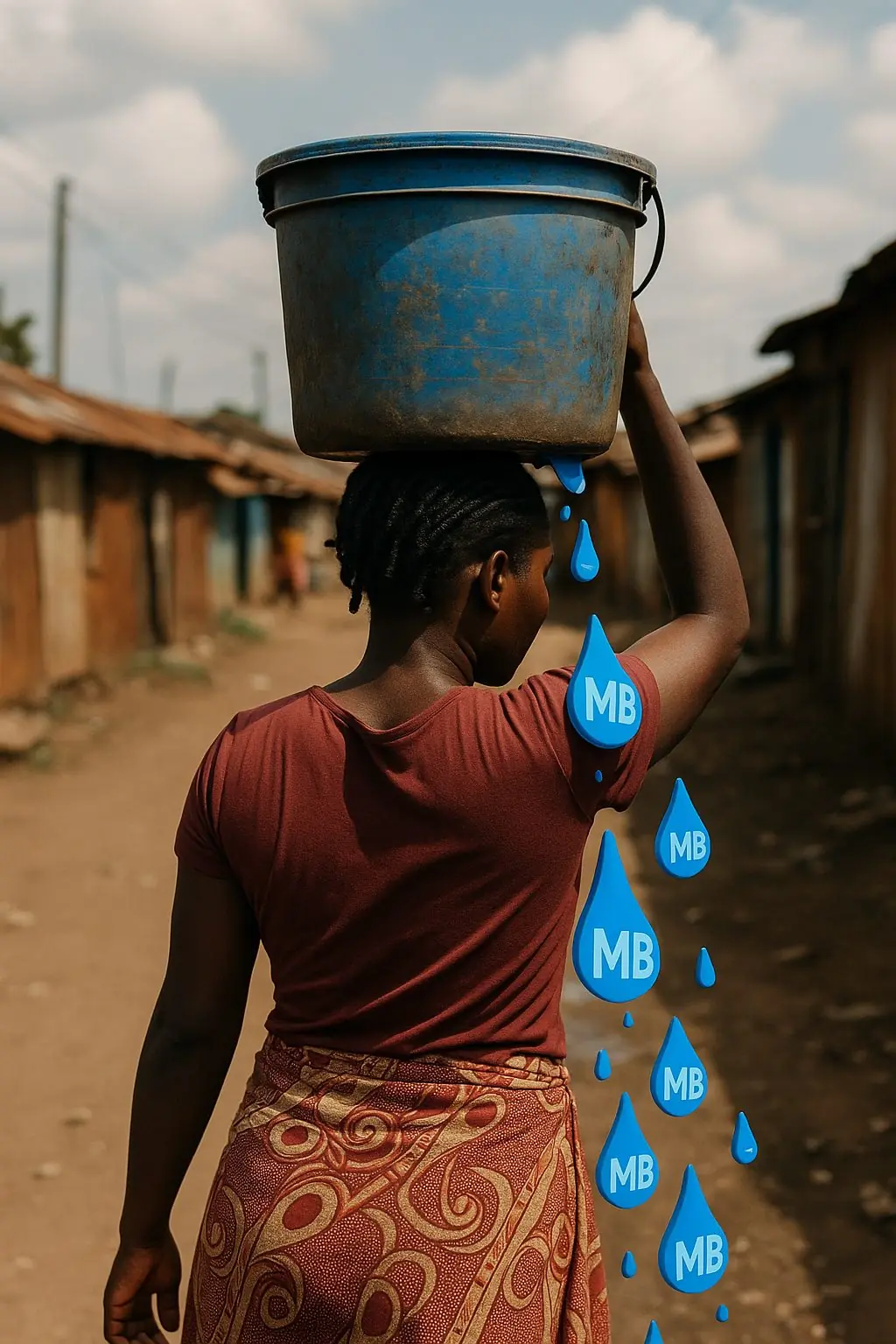
In many African cities, millions of people still access the internet the same way previous generations collected water: through daily trips, small containers and constant rationing. However, today's buckets don't just run out fast; they leak.
Just like walking long distances to fetch water in a jerrycan that drips with every step, people buy tiny data bundles (20 bob, 50 bob, 100 bob) only to watch them disappear before any meaningful use. Background apps, auto-play videos, ads, OS updates, weak-signal retries: the “digital bucket” is already half-empty by the time they get online.
In the same way some families collected water that was dirty, unsafe or contaminated, many people today are accessing digital services that are low-quality, unprotected or outright harmful. What looks like “access” on the surface can actually be doing more harm than good.
Where the digital leaks really hurt
Leak 1: Poor-quality home Wi-Fi. When connections buffer, lag or drop, households lose time, income and trust. A poor connection quietly drains opportunity, just like carrying home dirty water that cannot be used.
Leak 2: Frequent outages. Every outage is a digital dry spell. Businesses stall, students fall behind and families disconnect. A home may be “connected” on paper, but the reality is empty.
Leak 3: Speeds that don't match real needs. A modern household cannot function on 2–5 Mbps. With multiple users, learning, streaming and work, this is the equivalent of bringing home too little water to live on. The shortage holds people back every day.
Leak 4: Unlicensed or unreliable operators. Just as unsafe water sources lead to illness, unlicensed or unregulated internet providers introduce real digital risks. These connections may work for a moment, but they create long-term harm through instability, insecurity and lack of accountability.
Leak 5: Data and financial leakages. On unsecured or low-quality networks, people unknowingly expose personal data, login credentials, mobile-money accounts and financial information. This is the digital version of drinking contaminated water: harmful, invisible and dangerous.
The big truth
A community cannot thrive on leaking buckets. It cannot thrive on unsafe water. And it cannot thrive on unsafe, unreliable digital access.
Meaningful connectivity requires moving beyond rationed, unstable, unprotected internet toward high-quality, affordable, in-home broadband that doesn't leak and doesn't harm. When clean water finally flowed into homes, communities transformed. When reliable, safe broadband flows into homes, the digital economy will transform too.